
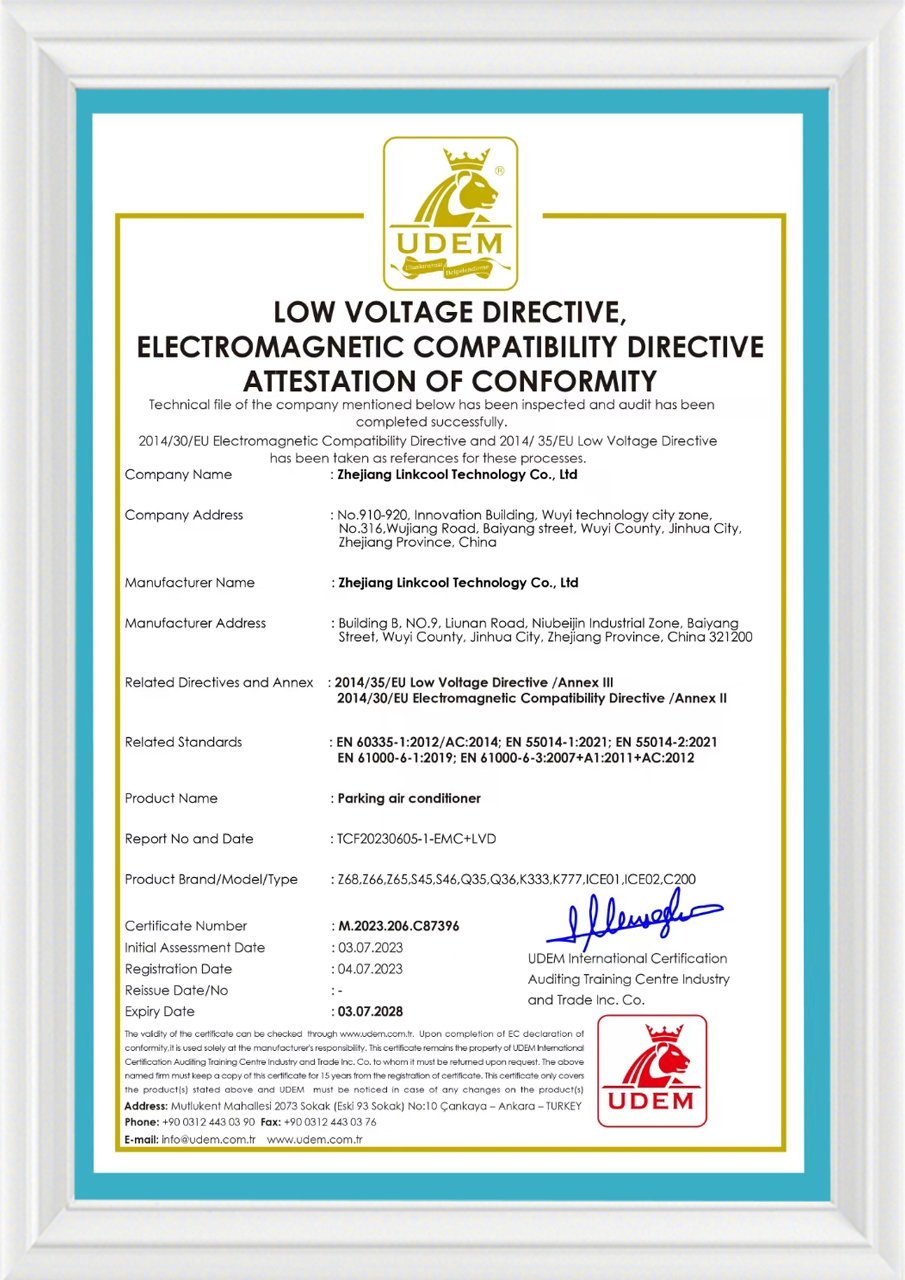
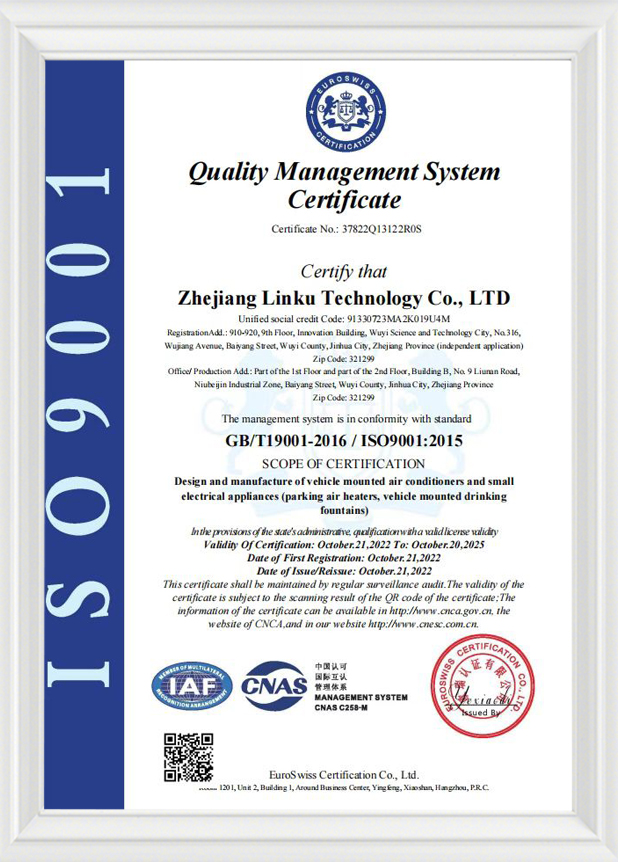
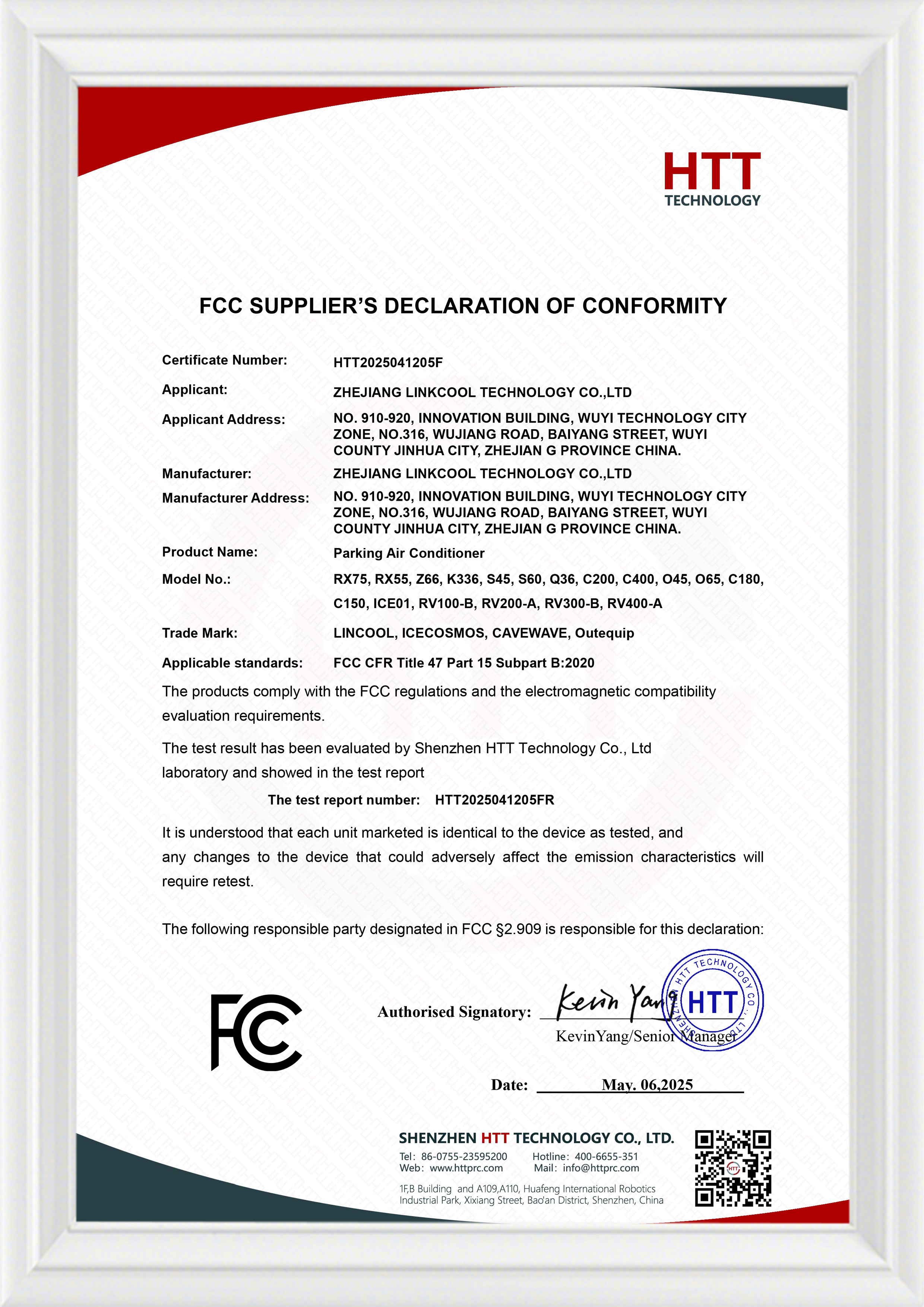
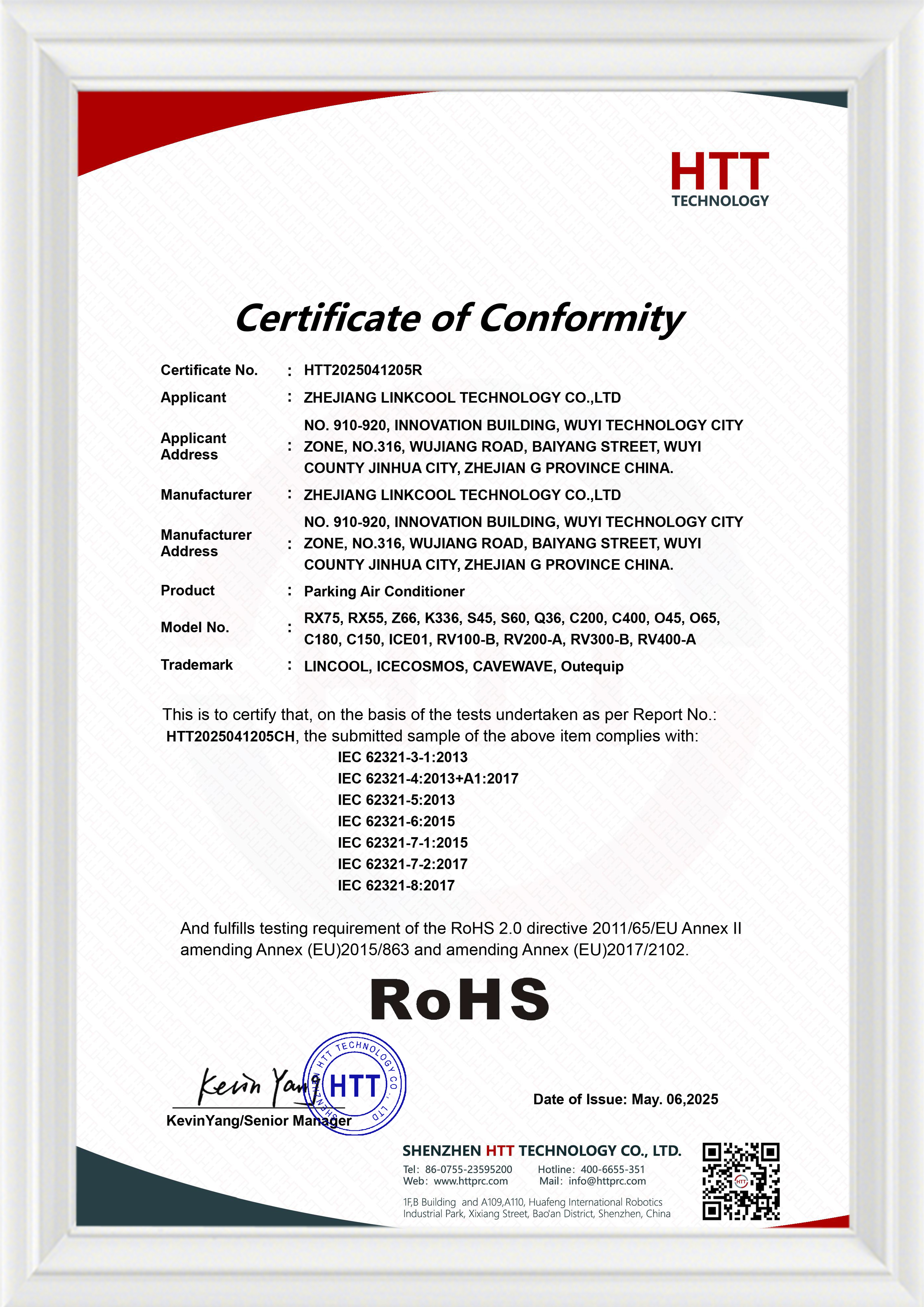
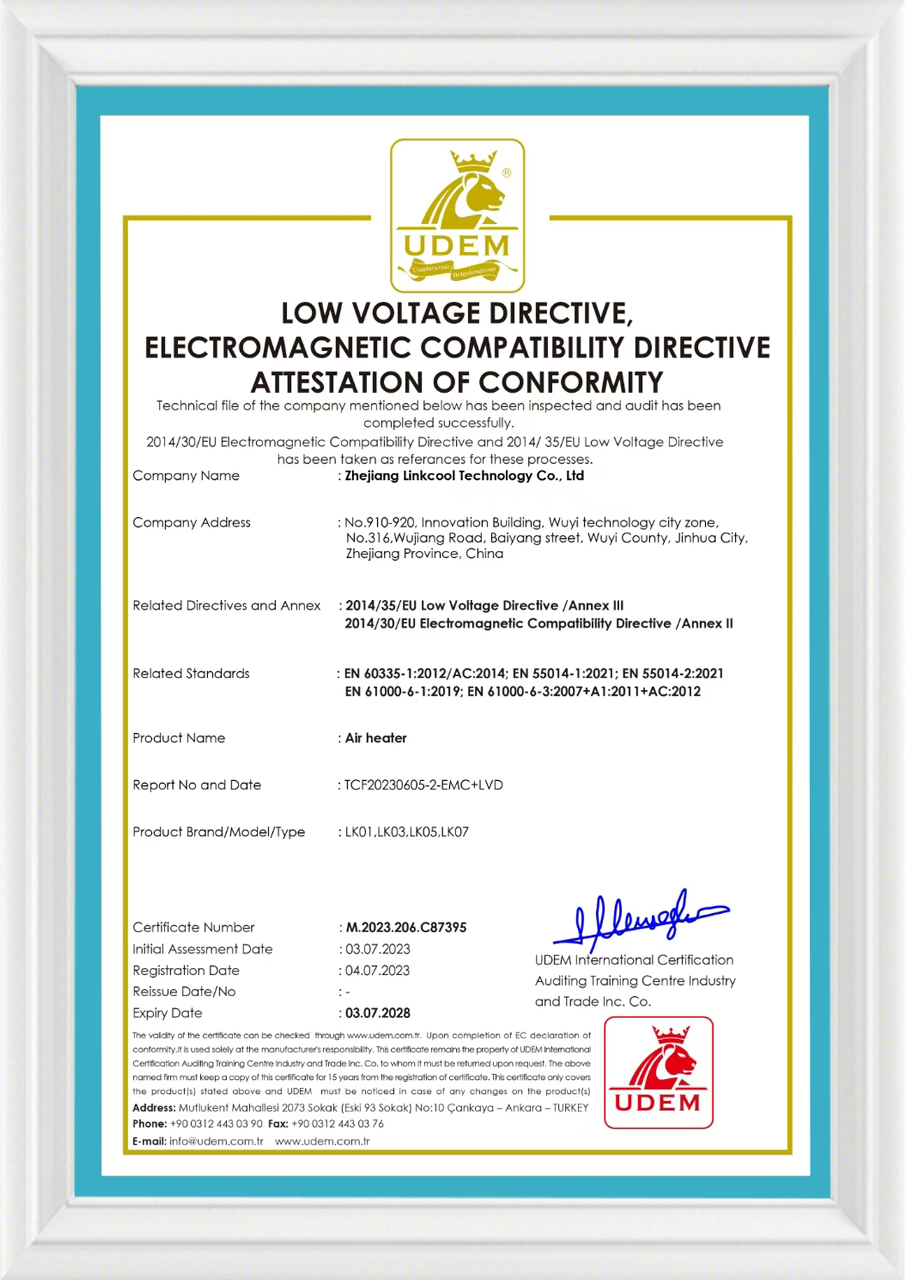
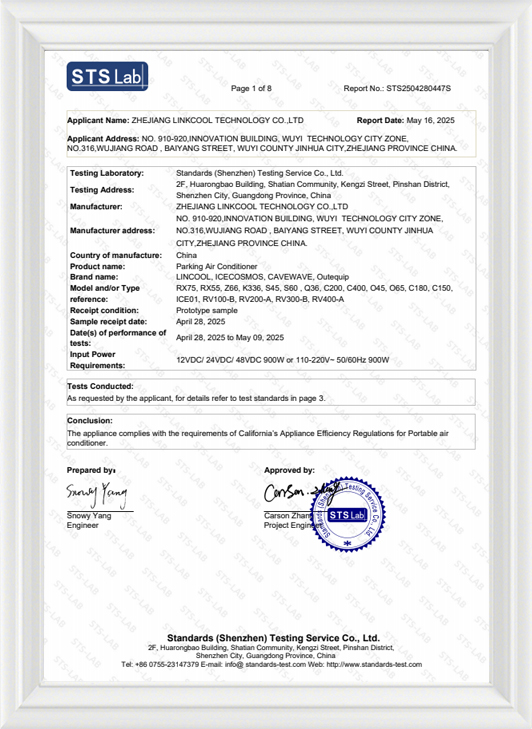
Zhejiang Linkcool Technology Co., Ltd. is China Portable Camping Heater Manufacturer and Sale Portable Camping Heater Factory. It focuses on the research, development, production and sales of automotive new energy appliances. Its main products include parking air conditioners, parking heaters and car water dispensers. As an integrated industrial and trade enterprise, we are committed to providing customers with high-quality, high-performance automotive appliances and outdoor camping appliances. We have more than 800 after-sales service outlets across the country.
Zhejiang Linkcool Technology Co., Ltd. covers an area of 20,000 square meters, providing employees with a spacious working environment. It currently has more than 150 employees and a professional R&D team and production team. We actively conduct technical exchanges and cooperation with industry experts and partners to jointly promote technological progress in the industry.
RV air conditioning is usually discussed in terms of BTU capacity and power consumption, but the physical location of the cooling ...
View MoreA larger tent does not automatically require a dramatically larger air conditioner. Outdoor cooling behaves differently from resid...
View MoreOn September 17, the 10th China "Heating and Cooling Intelligent Manufacturing" Awards Ceremony was held in Shanghai, where Zhejia...
View MoreWinter driving creates two different heating demands for commercial vehicles. A truck may need a warm sleeper during an overnight ...
View MorePortable Camping Heater Industry Knowledge Extension
Buying the unit is the easy part. Getting a diesel heater for caravan installed correctly takes planning. The process breaks into five stages, and skipping any one leads to problems later.
Stage one: choose the mounting location. The heater body needs outside air for combustion. That means mounting it in a sealed enclosure under a caravan floor, inside a external locker, or through a dedicated hole in the floor with a weatherproof cover. No shortcuts here—mounting the unit inside the living space without proper separation is dangerous.
Stage two: run the combustion air and exhaust. Two pipes leave the heater: one pulls air in for burning, the other pushes exhaust out. Both must terminate outside the caravan. The exhaust pipe gets a slight downward slope so condensation drains. The combustion intake faces away from the exhaust outlet to prevent re‑ingesting fumes.
Stage three: install the fuel system. A diesel heater for a caravan needs a fuel pickup. The cleanest method is a standpipe inserted into the top of the existing diesel tank. T‑fitting into the engine fuel line works too, but risks starving the engine if both draw at once. The metering pump mounts near the tank, angled upward, with a small inline filter before the pump.
Stage four: wire the electrical side. The control panel goes somewhere visible from the sleeping area. Power comes directly from the leisure battery through a fused circuit. Wire gauge matters—too thin, and voltage drop prevents the glow plug from reaching temperature.
A parking heater car installation can run all night without issue, provided the vehicle's electrical system and fuel supply support the draw. The limiting factor is rarely the heater itself. It is the battery.
The practical limit for running all night is the battery, not the heater. A healthy battery and a correctly installed unit run continuously for 24 hours or more without intervention.
Not every diesel heater design handles overnight operation equally. Three main types exist, and two of them work fine for all‑night use. One does not.
Standard air heaters (recommended for overnight)
These are the most common night diesel heater designs. They draw outside air, burn it in a sealed chamber, and blow cabin air across a heat exchanger. No combustion gases touch the living space. Models from recognized brands or well‑built Chinese units (with proper installation) run all night safely. Look for units with modulated output—they reduce heat automatically once the target temperature is reached, which saves fuel and reduces carbon buildup.
Hydronic (water) heaters (also suitable)
These night diesel heater units heat coolant that circulates through a small radiator or the vehicle's existing heating core. They take longer to warm up a caravan but distribute heat more evenly. All‑night operation is standard for hydronic systems. The drawback is complexity—more components means more potential failure points during a long night run.
Combustion chamber heaters (not recommended for overnight)
Some cheap portable units burn diesel directly in the same space they heat. These are not true sealed heaters. Running one all night in a caravan or car creates a serious carbon monoxide risk. No legitimate installation guide recommends overnight use for this type.
What to look for in an overnight‑capable night diesel heater
+86-18657986688
sale@lkcool.net
Building B, No. 9 Liunan Road, Niubeijin Industrial Zone, Baiyang Street, Jinhua, Zhejiang, China
Copyright © Zhejiang Linkcool Technology Co., Ltd. All Rights Reserved.
 Privacy Policy
Wholesale Car Camping Heater


 English
 Español