Content
Electrical current and power relationship
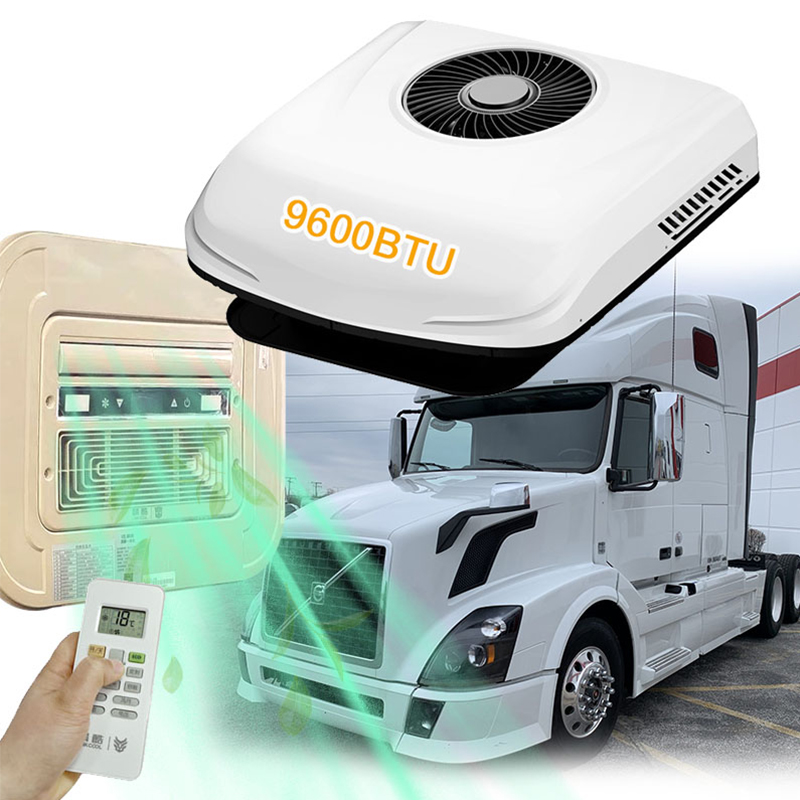
The primary difference lies in the current draw for the same cooling power. Electrical power (watts) equals voltage (volts) multiplied by current (amperes). For a 1,000W cooling unit:
A 12V Truck Air Conditioner draws approximately 83 amperes (1,000W ÷ 12V)
A 24V system draws approximately 42 amperes (1,000W ÷ 24V)
The lower current in 24V systems allows using thinner copper wiring (6 mm² vs. 16 mm² for 12V at the same length) and produces less resistive heat loss. Power loss in wires follows I²R (current squared times resistance). A 24V system with half the current generates one-quarter the wiring heat loss compared to a 12V system.
Component availability and cost
12V components (compressors, fans, control boards) are more widely available because most passenger vehicles, RVs, and light trucks use 12V electrical systems. Replacement parts cost 10–20% less than 24V equivalents.
24V components are standard in heavy trucks (Volvo, Scania, DAF, MAN), buses, and construction equipment. They are less common in light-duty vehicles.
Energy efficiency comparison
At the same cooling capacity (e.g., 1,200 BTU/h, approximately 350W of cooling power), a 24V system typically achieves 3–5% higher overall efficiency than a 12V system. The efficiency gain comes from:
Lower I²R losses in wiring (2–3% improvement)
Reduced inverter or converter losses if the compressor uses a different voltage (1–2% improvement)
Smaller voltage drop along long cable runs (0.2–0.3V drop for 24V vs. 0.5–0.8V drop for 12V over 5 meters of 10 mm² cable)
Runtime calculation example
Assume a 12V system consuming 45A (540W) and a 24V system consuming 22A (528W) while providing identical cooling output. Both use a battery bank with 2,000 Wh usable capacity (e.g., two 12V 100Ah lithium batteries in parallel for a 12V system, or the same two batteries in series for 24V system).
12V runtime: 2,000 Wh ÷ 540W = 3.7 hours
24V runtime: 2,000 Wh ÷ 528W = 3.8 hours
The difference (approximately 0.1 hour or 6 minutes) is negligible for most users. Real-world runtime depends more on ambient temperature, insulation quality, and compressor duty cycle than on voltage choice.
Vehicle electrical system matching
The truck's existing electrical system determines voltage compatibility without modification.
A 12V truck (most light-duty pickups, older medium trucks) requires a 12V air conditioner. Adding a 24V unit requires a DC-DC converter (12V to 24V, typically $80–150) and a separate battery bank, increasing complexity.
A 24V truck (most heavy-duty European and Asian trucks) requires a 24V unit. A 12V unit cannot draw sufficient power from a 24V system without a step-down converter (24V to 12V, 30–60A capacity, $50–120).
Alternator charging considerations
The vehicle alternator must recharge the battery bank used by the parking AC. For a 12V system drawing 45A while parked, the alternator needs to supply approximately 50–60A (accounting for charging losses). Most light-truck alternators (120–180A) handle this load. For a 24V system drawing 22A, the alternator supplies 25–30A, which is within the capacity of heavy-truck alternators (typically 80–200A at 24V).
Initial purchase cost
|
Component |
12V System (typical USD) |
24V System (typical USD) |
|
Complete roof-mounted unit (8,000 BTU/h) |
$600–1,000 |
$650–1,100 |
|
Compressor replacement |
$150–250 |
$180–300 |
|
Control board |
$40–80 |
$50–100 |
|
Wiring harness (5 meters) |
$30–50 (16 mm² cable) |
$25–40 (6 mm² cable) |
The 12V system has a lower entry price (approximately 10–15% less for complete kits) due to higher production volume. Replacement parts are also more readily available at auto parts stores. However, for high-power units above 10,000 BTU/h (approximately 2,900W cooling), 12V systems require very thick cables (25–35 mm²), which cost 50–80% more than the 6–10 mm² cables used for 24V systems.
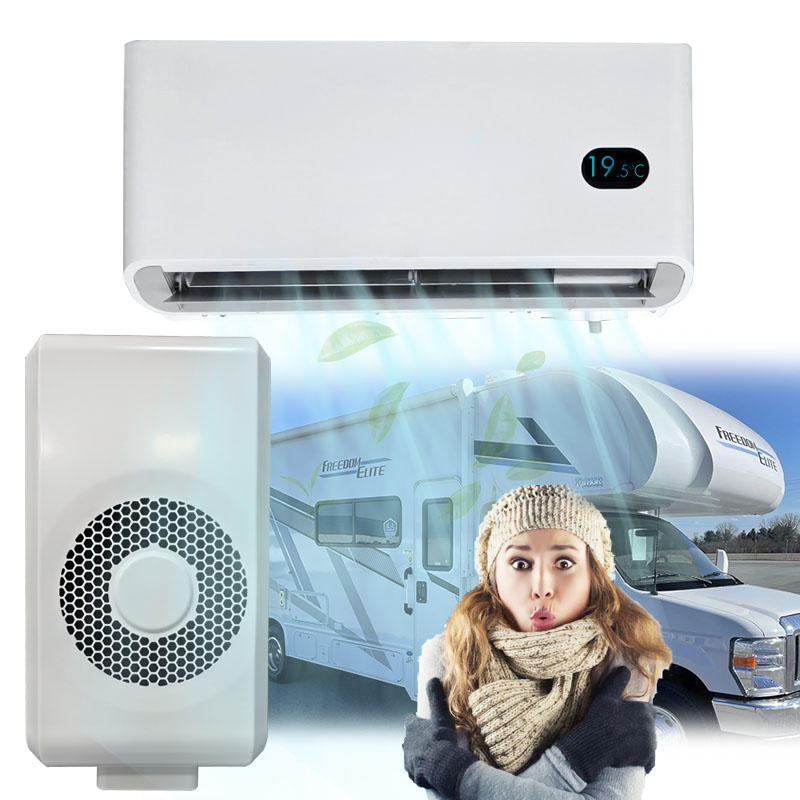 Portable Split Parking Air Conditioner for RV
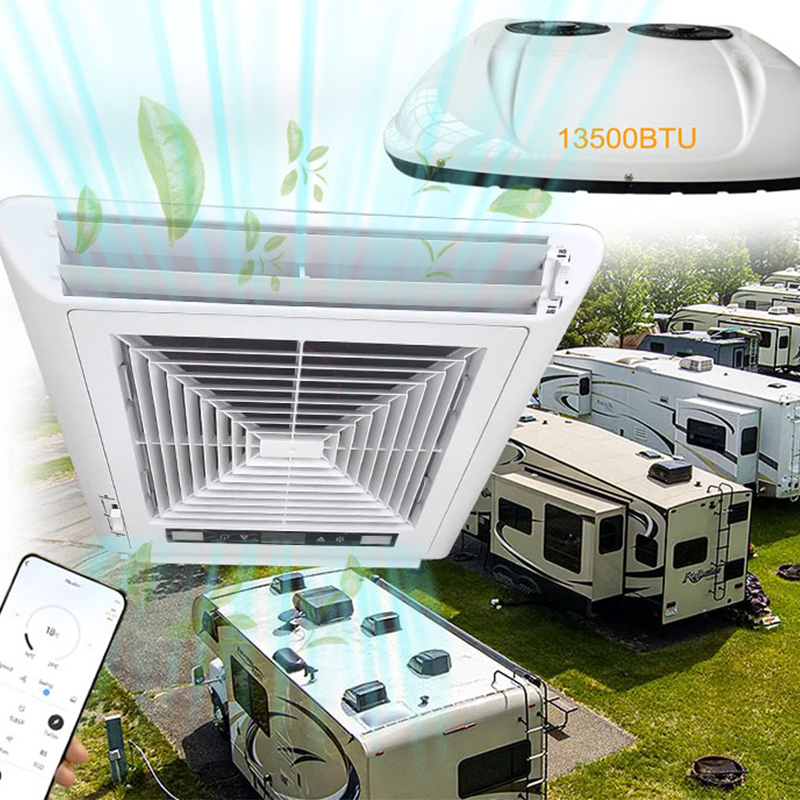 Portable Split Parking Air Conditioner for RV
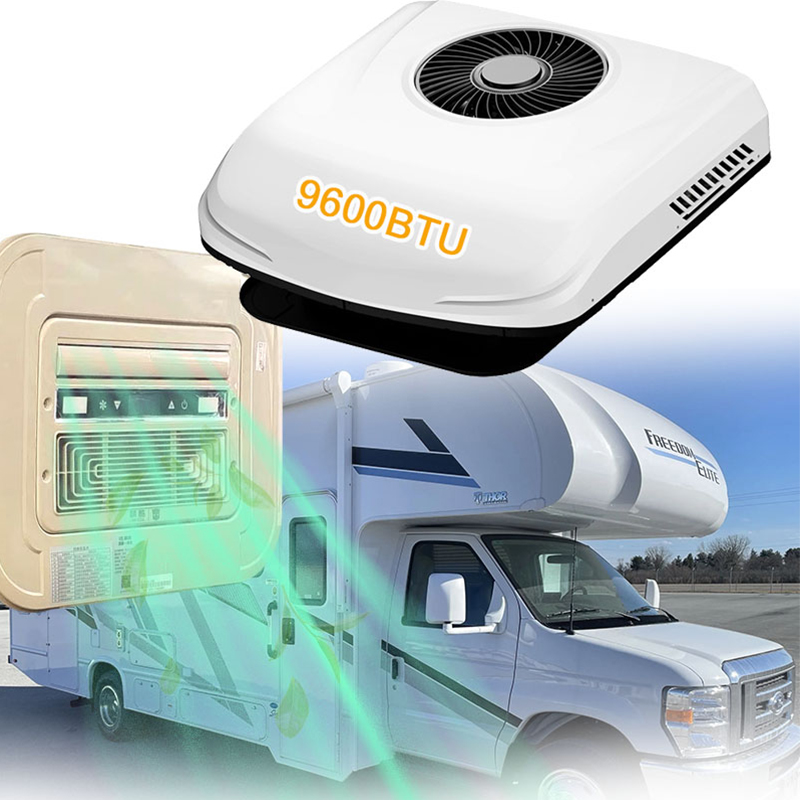 Portable Split Parking Air Conditioner for RV
 Hot Water Dispenser
 Outdoor Freezer
 Outdoor Freezer
 Car Refrigerator
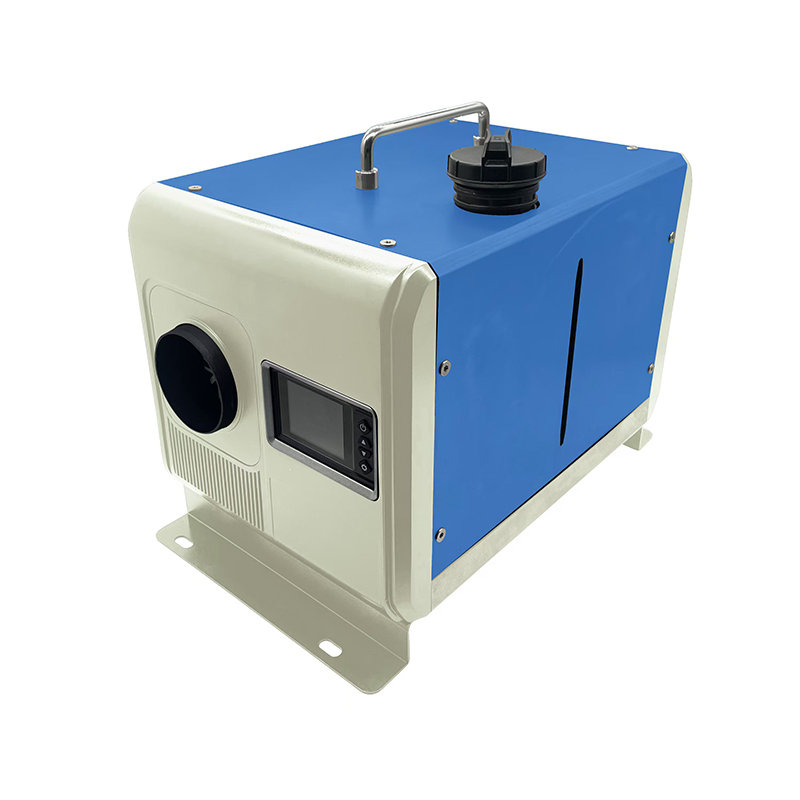 Diesel Heater For Vehicles
+86-18657986688
sale@lkcool.net
Building B, No. 9 Liunan Road, Niubeijin Industrial Zone, Baiyang Street, Jinhua, Zhejiang, China


 English
 Español