Content
RV air conditioning is usually discussed in terms of BTU capacity and power consumption, but the physical location of the cooling system can have an equally important effect on daily comfort. A rooftop unit puts the major components above the living area, while an Electric Split RV Air Conditioner Kit separates the indoor and outdoor sections.
That difference changes more than appearance. Roof space, interior noise, weight distribution, airflow direction, solar panels, storage accessories, and installation flexibility can all be affected by the AC configuration. Recent RV discussions increasingly compare these two layouts rather than treating the rooftop format as the only solution.
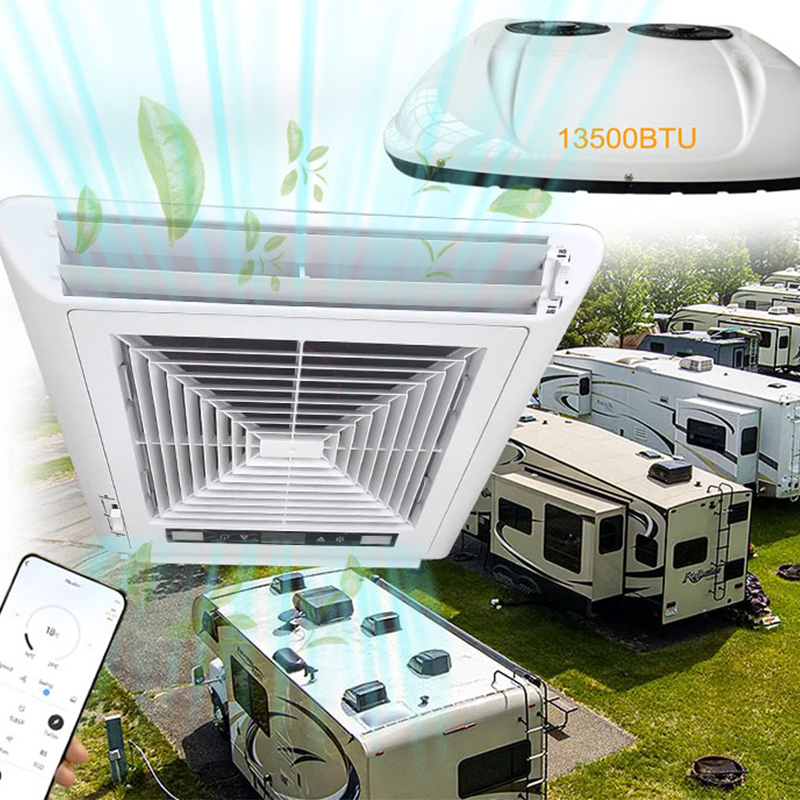
A conventional rooftop RV air conditioner combines the compressor, condenser, evaporator, and fans into a single housing mounted through a roof opening. This creates a relatively straightforward installation, especially on RVs already designed around a standard AC opening.
The trade-off is that the entire AC assembly occupies valuable roof real estate. A current rooftop RV installation guide, for example, specifies a roof opening of approximately 14¼ × 14¼ inches for a particular system and requires adequate clearance around roof equipment.
An Electric Split RV Air Conditioner Kit takes a different approach. The indoor evaporator and blower remain inside the RV, while the compressor and condenser can be mounted separately outside the main living area.
This separation gives RV designers more freedom over component placement. A condenser may be positioned on a rear panel, under a suitable structure, or at another ventilated location, depending on the vehicle design and kit specifications.
| Layout Factor | Rooftop AC | Split RV AC |
| Major components | Combined on roof | Separated indoor/outdoor |
| Roof space | Dedicated area required | Less equipment on roof |
| Compressor location | Above living space | Outside indoor living area |
| Installation | Generally simpler | Requires line routing |
| Layout flexibility | Limited by roof position | Greater placement flexibility |
| Interior noise | Mechanical components near ceiling | Compressor separated from indoor unit |
Current RV comparisons similarly identify roof-space limitations and indoor noise as reasons some owners consider split configurations.
Modern RV roofs may already carry solar panels, satellite equipment, roof vents, storage accessories, antennas, or other hardware. Adding another large rooftop component can make the available layout increasingly crowded.
This is particularly relevant for smaller campers. Moving the condenser away from the roof can preserve space for photovoltaic modules or other equipment. A recent RV industry discussion specifically highlights split systems as a way to reduce roof equipment concentration and preserve useful roof areas.
A rooftop AC concentrates the complete cooling assembly above the vehicle's living space. A split configuration allows some of that hardware to be positioned lower on the vehicle.
This does not automatically make a split system suitable for every RV. The external condenser still requires a strong mounting location, adequate ventilation, weather protection, and safe clearance. The advantage comes from having more options rather than simply reducing total equipment weight.
Noise perception inside an RV depends partly on where the compressor and fans are located. A rooftop system places the compressor close to the roof directly above the living area, while a split system can position the compressor and condenser outside the main cabin.
That separation can reduce the mechanical sound reaching the sleeping area. One current split-system comparison lists an indoor night-mode figure below 46 dB(A), compared with below 49 dB(A) for a rooftop configuration, although measurements from different manufacturers should not be treated as directly equivalent.
Real-world results also depend on mounting surfaces. A condenser attached directly to a thin RV wall may transmit vibration into the structure, so isolation mounts and a rigid support frame can be important parts of the installation design.
Changing the AC layout does not remove the need to size the system correctly. RV dimensions, window area, roof insulation, wall construction, climate, and solar exposure all influence cooling requirements.
| RV Condition | Design Consideration |
| Large window area | Higher solar heat gain |
| Thin roof insulation | Greater heat transfer |
| Small roof with solar panels | Split layout may preserve roof space |
| Sleeping area near rooftop unit | Compressor and fan noise become relevant |
| Limited external mounting area | Rooftop configuration may be easier |
The convenience of a rooftop unit comes partly from its integrated design. A split system requires the indoor and outdoor sections to communicate through refrigerant lines, electrical connections, and control wiring.
That means line routing becomes part of the RV layout. The path should avoid sharp bends, excessive length, heat sources, and areas exposed to physical damage. Wall or panel penetrations also need suitable sealing to prevent water intrusion.
RV installation guidance confirms that rooftop and mini-split systems require different installation approaches, with split systems requiring careful placement of the indoor unit and additional planning for the separated components.
The choice between rooftop and split cooling is therefore not simply a question of which system produces colder air. The installation position affects how the RV uses its roof, where mechanical noise is generated, how equipment weight is distributed, and how easily the interior layout can be arranged.
An Electric Split RV Air Conditioner Kit can provide greater freedom for RV builders who need to preserve roof space or separate the compressor from the living area. A rooftop system can remain attractive for RVs designed around a dedicated roof opening and compact installation.
As RV layouts become increasingly equipment-dense, AC placement deserves attention at the design stage rather than after every other roof component has already been installed. The right configuration is ultimately the one that fits the vehicle's physical structure, electrical system, available mounting areas, and desired living environment.
 Portable Split Parking Air Conditioner for RV
Portable Split Parking Air Conditioner for RV
Portable Split Parking Air Conditioner for RV
 Portable Split Parking Air Conditioner for RV
 Hot Water Dispenser
 Outdoor Freezer
 Outdoor Freezer
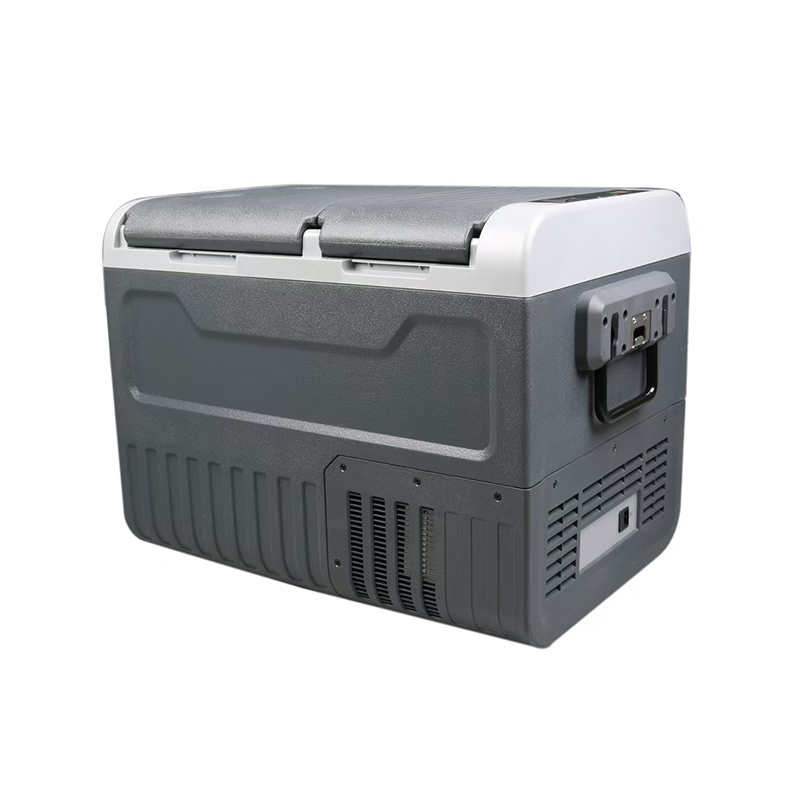 Car Refrigerator
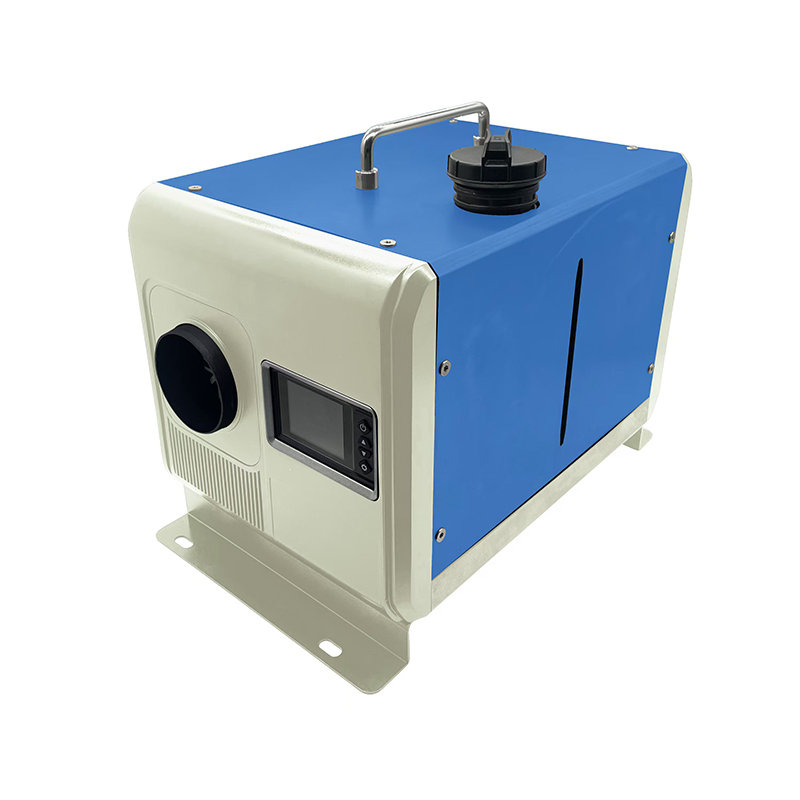 Diesel Heater For Vehicles
+86-18657986688
sale@lkcool.net
Building B, No. 9 Liunan Road, Niubeijin Industrial Zone, Baiyang Street, Jinhua, Zhejiang, China


 English
 Español